EAN-13 check digit calculator
A check digit is a single digit added to the end of a number, such as a barcode or account number. It is calculated with a fixed method. To check the number after entry or transmission, the receiver recalculates the check digit and compares it with the one received. A match means the data is probably valid. A mismatch means an error or corruption. Check digits are widely used in barcodes, credit card numbers and ISBNs to catch errors.
The check digit is:
How does it work?
To calculate the check digit, we follow these guidelines:
- Sum all the digits in even positions and then multiply the result by 3.
- Add the sum of digits in odd positions (excluding the last digit, which is the check digit) to the calculated number.
- Divide this combined number by 10 and keep the remainder.
- If the remainder is not zero, subtract it from 10.
- The check digit is validated.
What do barcode numbers mean?
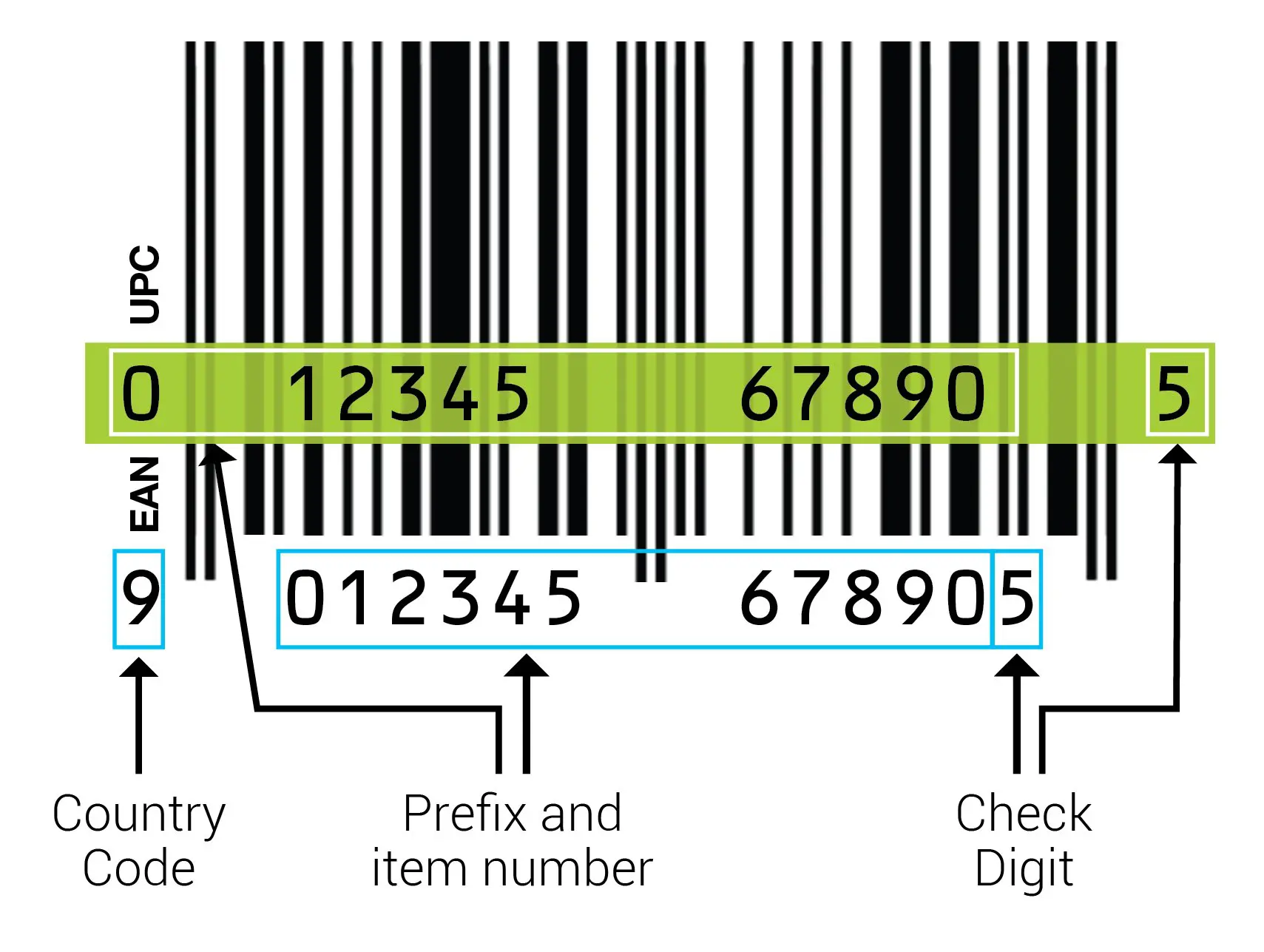
The numbers in a barcode describe the product or item it represents. A typical barcode starts with a GS1 prefix. The prefix shows which GS1 member organisation issued the number. It does not show where the product was made. It also includes a manufacturer code, which identifies the company that produced the item. The product code follows and identifies the product within that manufacturer's range. A check digit is often included to catch errors. When scanned, these numbers are used for inventory management, pricing and tracking through the supply chain, and for logistics, sales and stock management.
Which product is this barcode?
Checking a sneaker or streetwear barcode? Look it up to see the product it belongs to. Free, no account.
Have manufacturer style codes in a CSV? Enrich your catalogue in bulk. For a recurring integration, the barcode lookup API returns product, size and images for each code, with a 7-day free trial. The sneaker price API adds resale prices for the size of each barcode.
Learn more
How to calculate a UPC/EAN check digit by hand
Compute the modulo-10 check digit for any UPC-A or EAN-13 with a pen, paper, and one small rule.
EAN-13 format explained: structure & prefixes
An EAN-13 barcode is a 13-digit GTIN-13 built from a GS1 prefix, a company prefix, an item reference and a check digit.
Why your barcode check digit does not match: 7 causes
The seven reasons a UPC or EAN check digit fails validation, and how to fix each one.
How to validate a barcode: UPC, EAN & GTIN
A practical guide to checking that a UPC, EAN, or GTIN is well formed before you trust it.